Watches · In Depth
Is It Time for a Hublot?
Hublot was combining gold with rubber long before it became fashionable, and its more ambitious watches now contain some genuinely interesting engineering. With luxury watch prices reaching extraordinary heights, perhaps it is worth another look.
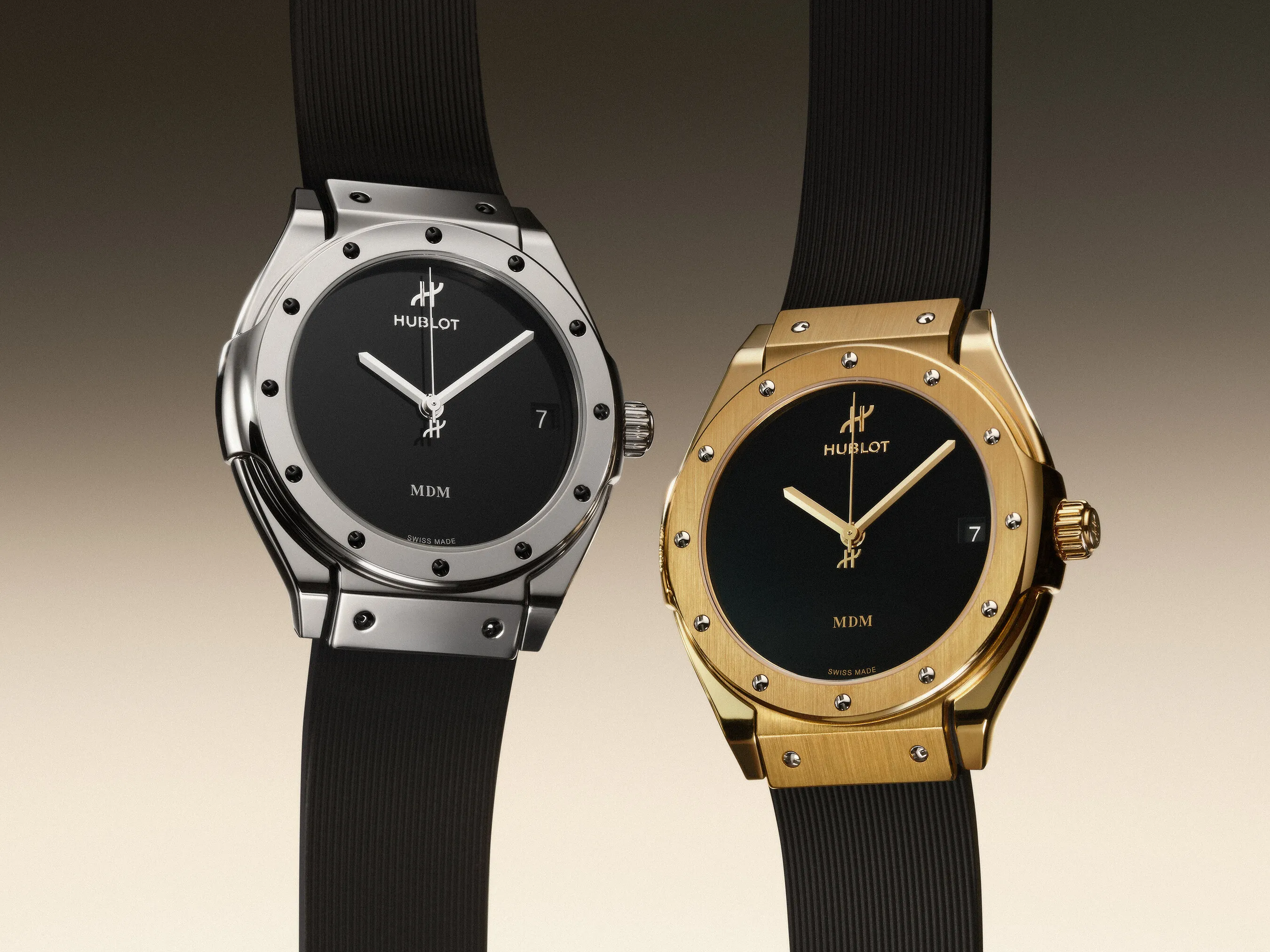
When Carlo Crocco introduced the first Hublot in 1980, he chose a combination of materials that would have seemed decidedly peculiar to traditional Swiss watchmakers. The case was made of gold, the strap of rubber. Crocco had spent several years developing the latter, paying particular attention to comfort and durability, and he evidently saw no reason why a precious metal should necessarily be accompanied by leather or a matching bracelet.
Today, a gold watch on a rubber strap is an entirely familiar proposition. Patek Philippe, Audemars Piguet and numerous other manufacturers offer variations on the theme. Crocco’s idea turned out to be a good one.
Hublot subsequently developed a rather different identity. Under Jean-Claude Biver, who arrived in 2004, the brand introduced the Big Bang and embraced an increasingly conspicuous mixture of materials, colours and industrial design. The watches grew larger, the cases more elaborate and the marketing more exuberant. The approach was commercially successful, although it did little to endear Hublot to traditional watch enthusiasts.
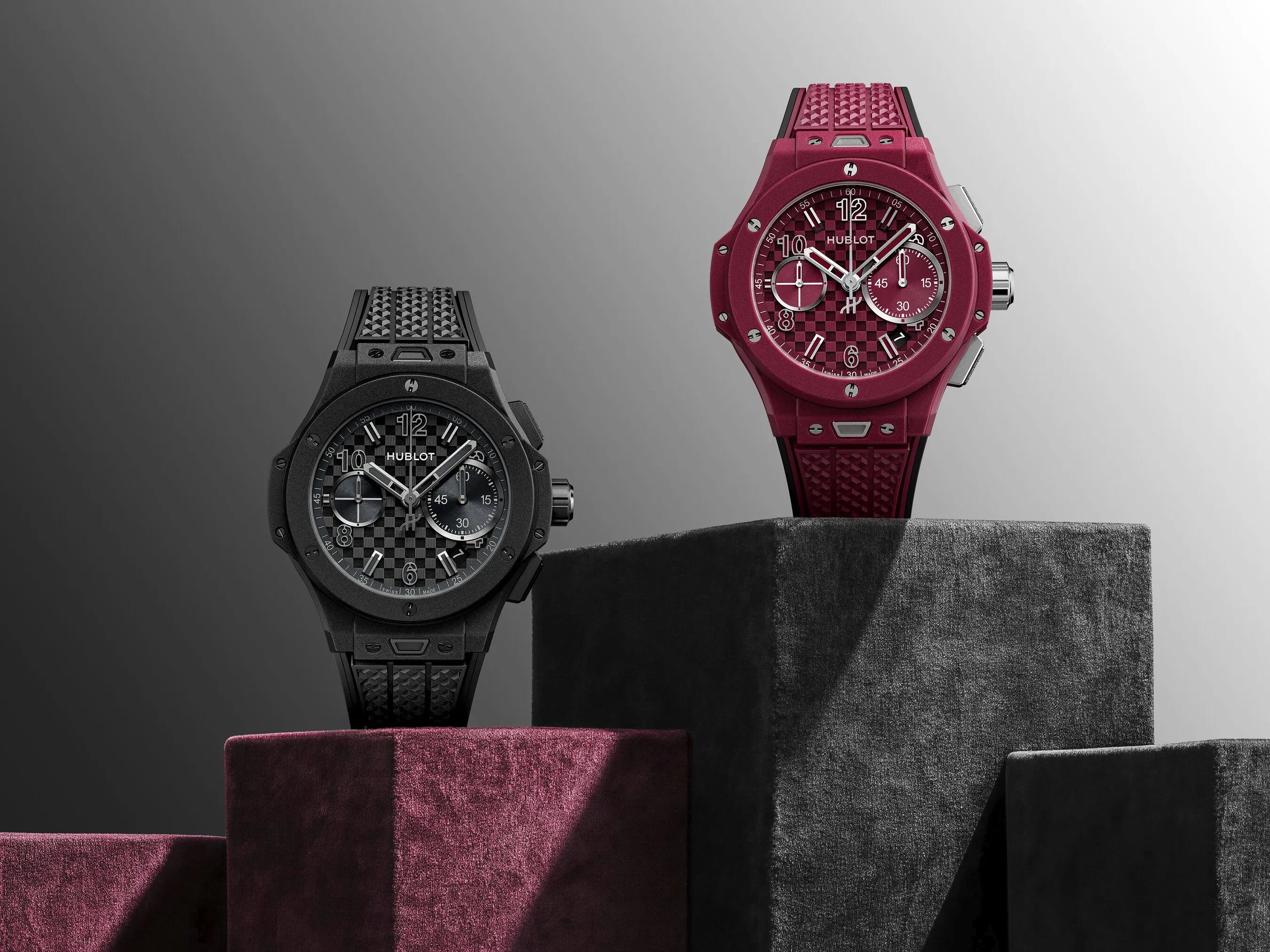
Some of the criticism was understandable. Early Big Bang chronographs used movements derived from the Valjoux 7750, a thoroughly competent calibre also found in considerably less expensive watches. The prices invited scrutiny, particularly when competing manufacturers offered movements developed specifically for their own collections.
Hublot’s reputation has proved remarkably persistent, even as the watches themselves have changed. Meanwhile, the wider luxury watch industry has become considerably more comfortable charging substantial premiums for striking designs, unconventional materials and relatively straightforward movements. The arguments once directed almost exclusively at Hublot could now be applied to quite a few prestigious competitors.
It seems a reasonable moment to examine what the company actually makes.
The Unico
The most obvious place to begin is the Big Bang Unico.
Hublot introduced its own Unico chronograph movement in 2010, and the current HUB1280 is a substantial development of that original architecture. It is an automatic flyback chronograph with a column wheel, a power reserve of approximately 72 hours and a mechanism arranged to make much of its operation visible from the dial side.
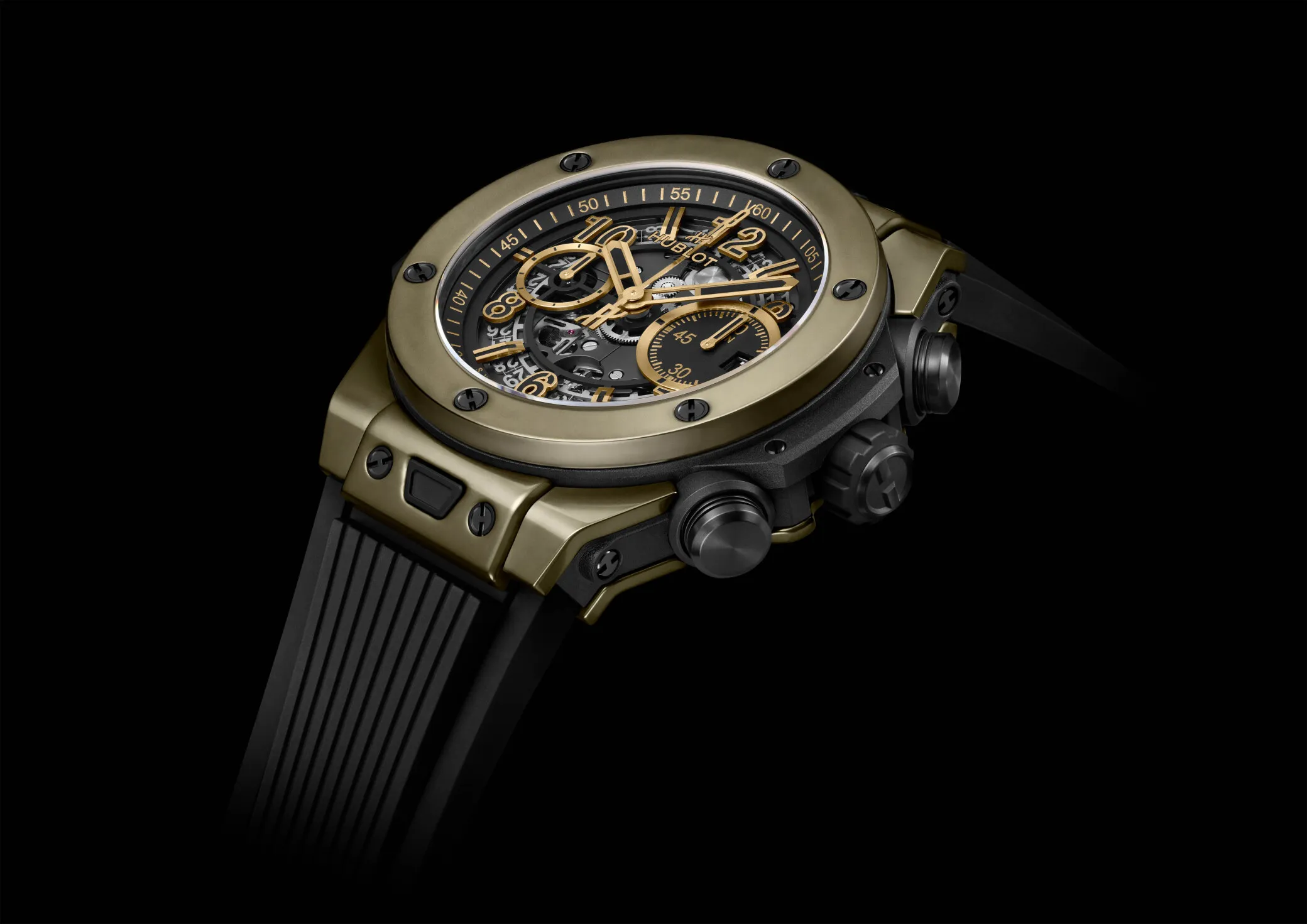
The flyback function allows the wearer to restart the chronograph with a single operation while it is running, rather than stopping, resetting and starting it separately. The column wheel coordinates the chronograph’s functions and is generally associated with more elaborate chronograph construction.
Neither feature is unique to Hublot, but the Unico is a serious movement with an identifiable mechanical character. Its construction is deliberately exposed, and the resulting appearance suits the Big Bang’s layered, industrial case.
The 42mm Big Bang Unico Titanium is a sensible reference point. Its titanium case combines polished and satin-finished surfaces, the movement offers a useful three-day power reserve, and water resistance is rated at 100 metres. The titanium case helps limit its weight.
The design will divide opinion. The exposed screws, complex case construction and skeletonised dial are central to its appearance. There is little point in buying one if you prefer the restraint of a Rolex Explorer. Yet the Unico deserves to be assessed as a sophisticated chronograph rather than dismissed on the basis of movements Hublot used twenty years ago.
A different approach to mechanics
The Big Bang Meca-10 makes an even more interesting case for the brand.
Its hand-wound manufacture movement offers ten days of power reserve, an unusually generous interval for a mechanical wristwatch. The movement is constructed around an open, architectural arrangement of bridges and mechanical components, with the remaining running time displayed through an unconventional indication.
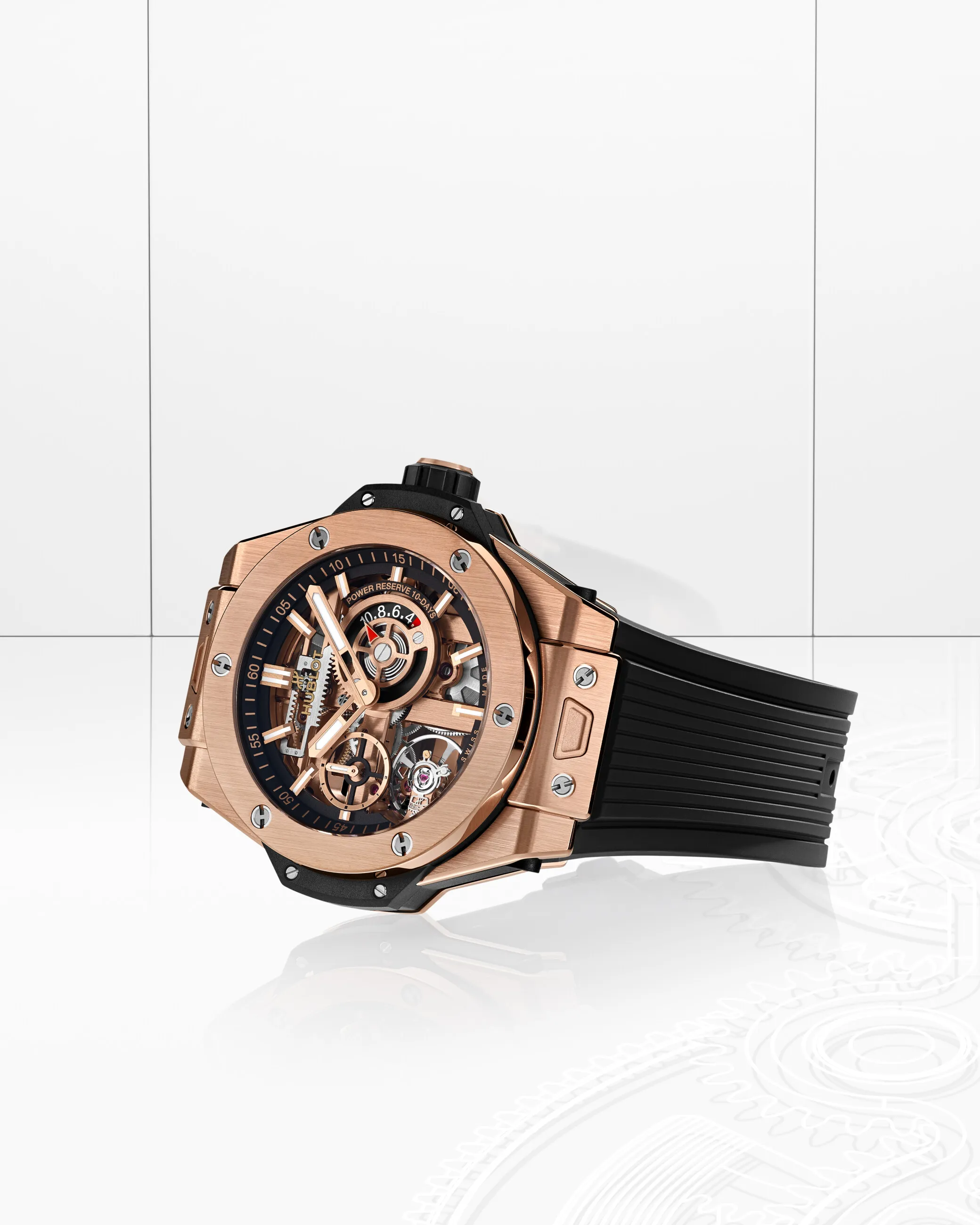
The appearance recalls a small mechanical construction set. Hublot makes no attempt to conceal the mechanism behind a traditional dial, allowing the movement to determine much of the watch’s visual character.
The revised 42mm Meca-10 introduced in 2025 is particularly interesting because it brings the design into a somewhat more manageable case. It remains an emphatically modern object, with little of the traditional decoration associated with high-end Swiss watchmaking.
There are practical compromises. Reading the time is less immediate than on a conventional three-hand watch, and the elaborate exposed architecture is unlikely to appeal to someone who prefers a simple dial. But the movement is genuinely unusual, and its considerable power reserve gives the design a practical benefit beyond its appearance.
The Meca-10 is a useful reminder that exceptional mechanical watchmaking can take forms quite different from the familiar arrangement of decorated bridges, polished screws and Geneva stripes.
Gold that resists scratching
Hublot’s expertise in materials is arguably its most distinctive achievement.
The company has invested heavily in ceramic, synthetic sapphire and unusual combinations of metals and composites. Its development of Magic Gold, in collaboration with the Swiss Federal Institute of Technology in Lausanne, is particularly noteworthy.
Traditional 18-carat gold is relatively soft. It scratches readily, something anyone who regularly wears a gold watch will recognise. Magic Gold combines gold with boron carbide, a very hard ceramic material, producing a composite that retains the required gold content while offering far greater resistance to surface damage.
Hublot reports a hardness approaching 1,000 Vickers, substantially exceeding that of conventional 18-carat gold. The manufacturing process is complex, involving the formation of a porous ceramic structure into which gold is introduced.
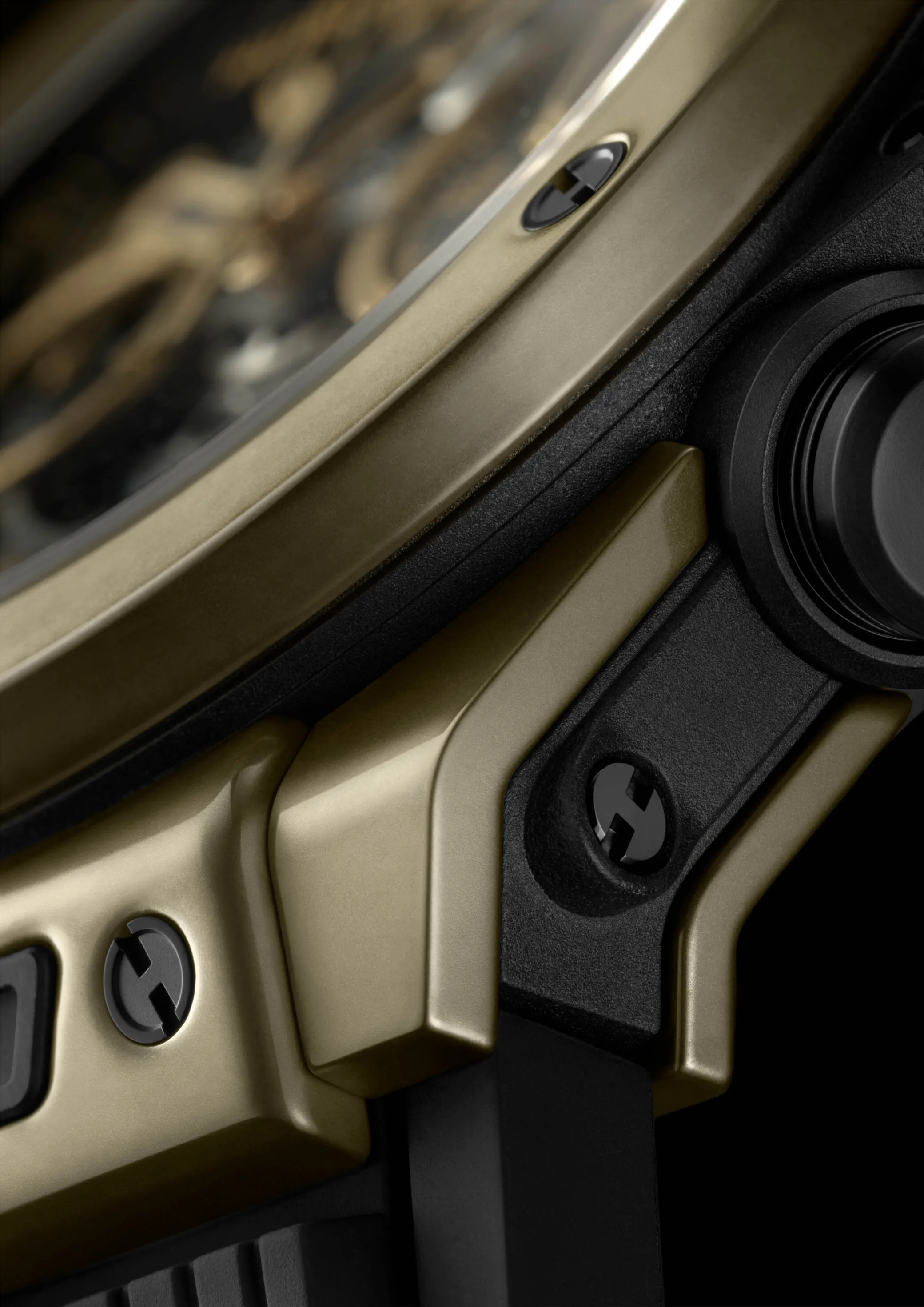
It is an elegant engineering response to a familiar problem with precious-metal watches. Whether the slightly unusual colour of the resulting material appeals is another matter.
Hublot has also developed considerable expertise in coloured ceramic and transparent sapphire cases. Manufacturing complex case components from sapphire presents significant difficulties because the material is extremely hard, brittle and challenging to machine and polish. The variety of colours and shapes Hublot now offers reflects a sustained investment in manufacturing technology.
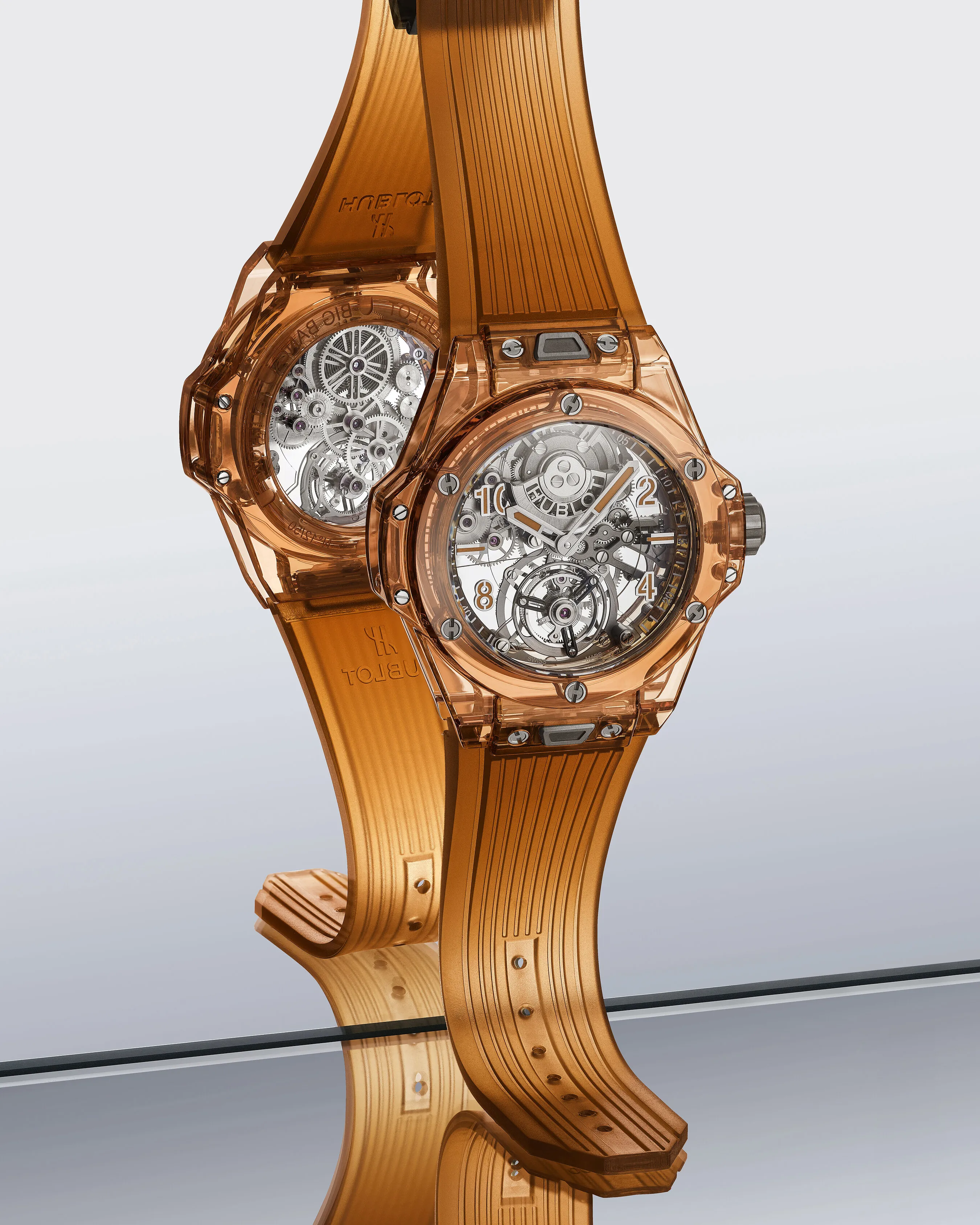
A complicated sapphire case is not inherently a better watchcase than one made from steel. Its appeal lies partly in the manufacturing achievement and partly in the visual effect. Both can be legitimate reasons to appreciate it.
Back to 1980
The recently introduced Classic Fusion Tributo offers a rather different perspective on Hublot.
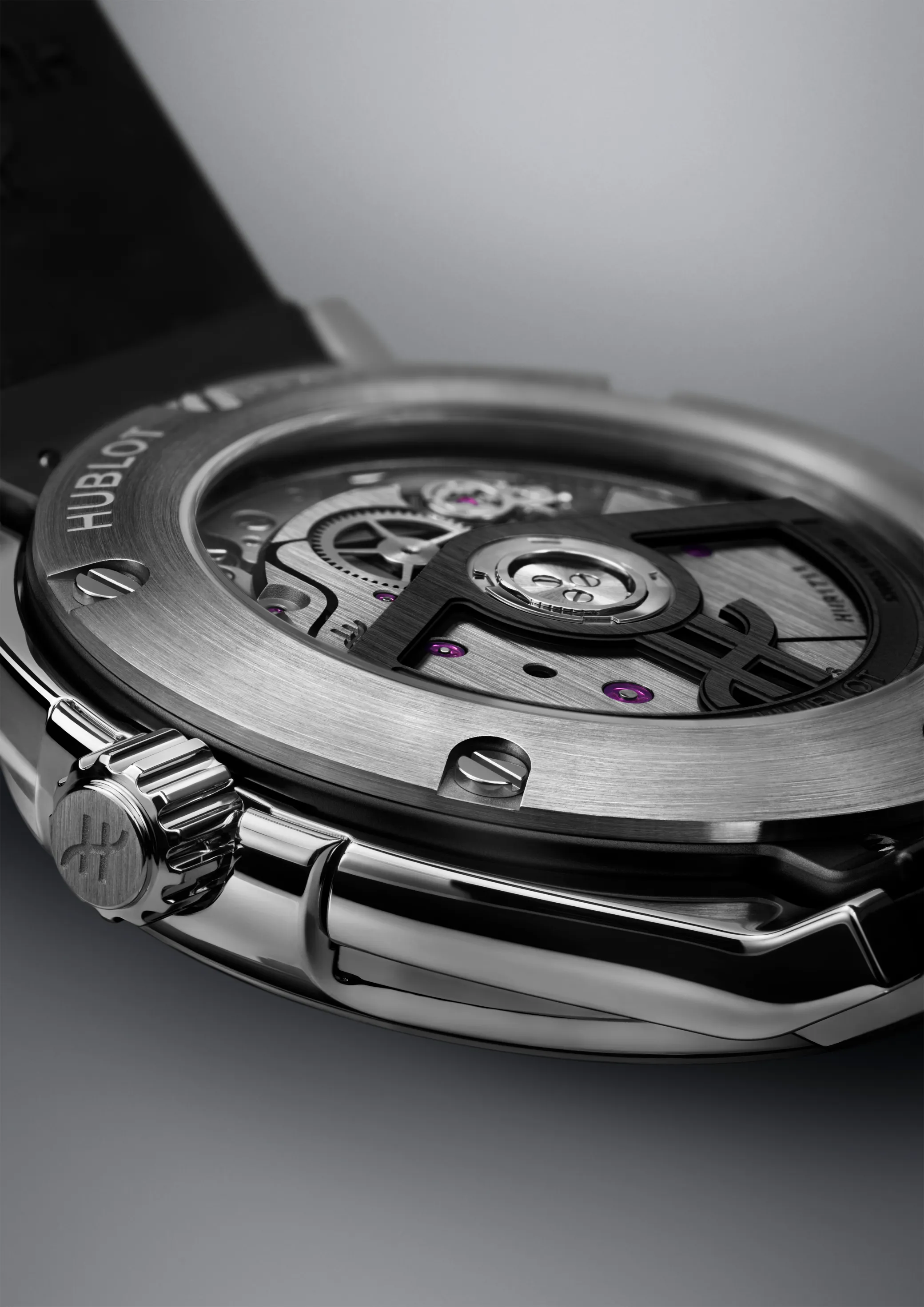
Conceived as a tribute to Crocco’s original design, it returns to the proportions and character of his original watch. The 38mm gold case, black rubber strap and distinctive arrangement of twelve bezel screws recall the 1980 design, while the construction and finishing are thoroughly contemporary.

At 9.5mm thick, the Tributo is considerably more restrained than the typical Big Bang. It uses the automatic HUB1711, based on a Zenith movement, with approximately 50 hours of power reserve.
It is a pleasing choice for this particular watch. The original Hublot was conceived primarily as a design object and used a quartz movement. The Tributo preserves the visual concept while introducing a mechanical calibre from a respected Swiss manufacturer.
There is still the matter of price. At approximately $30,900, the Tributo competes with some formidable watches, including examples with more elaborate proprietary movements and extensive traditional finishing.
Much of its appeal therefore rests on the quality of the case, the design and the historical significance of Crocco’s original concept.
Those are entirely reasonable considerations in a luxury watch, provided the buyer appreciates what the price represents.
Choosing a Hublot
Hublot has always been unusually willing to challenge the conventions of expensive watchmaking. Crocco did so with gold and rubber, Biver with the Big Bang’s exuberant design, and the current manufacture continues to explore materials and mechanical constructions that have relatively little in common with traditional haute horlogerie.
The results are mixed, as one might expect from a company that experiments so enthusiastically. Some models rely more heavily on appearance than their mechanical specifications might justify. Others contain sophisticated movements, impressive materials engineering and considerable attention to case construction.
It makes little sense to assess all of them in the same way.
For someone interested in mechanical substance, the Big Bang Unico is a convincing starting point. The Meca-10 offers a more unusual movement and a distinctive interpretation of mechanical design. Hublot’s Magic Gold and sapphire models demonstrate capabilities in materials engineering that deserve serious consideration. The Classic Fusion Tributo, meanwhile, shows that the company can produce a beautifully proportioned, relatively understated watch when it chooses.
None is obliged to appeal to everyone. A preference for traditional finishing, smaller cases or more restrained design is perfectly compatible with recognising their qualities.
Hublot’s original proposition was that an expensive watch could be made differently. Forty-six years later, the rest of the industry has adopted quite a few ideas that once made the brand seem eccentric.
There are now more interesting Hublots to choose from than its old reputation might suggest. Anyone attracted to the designs will find several models worth examining closely.
Sources
- Classic Fusion Tributo: a golden return to the 1980 origin, Hublot SA
- Hublot reinterprets its original watch with the Classic Fusion Tributo, LVMH
- Hands On: Hublot Classic Fusion Tributo, Watches by SJX
- Hublot unveils Big Bang Meca-10 in 42mm at LVMH Watch Week 2025, WatchTime
- Hublot presents Magic Gold, developed in collaboration with EPFL, La Cote des Montres