Watches · In Depth
Lange 1: The Best Watch Ever?
An unmistakable design, extraordinary craftsmanship and a degree of attention to detail that borders on the unreasonable. The A. Lange & Söhne Lange 1 is among the finest mechanical watches ever made. And it has a rather unusual quality: the better you get to know it, the more there is to enjoy.
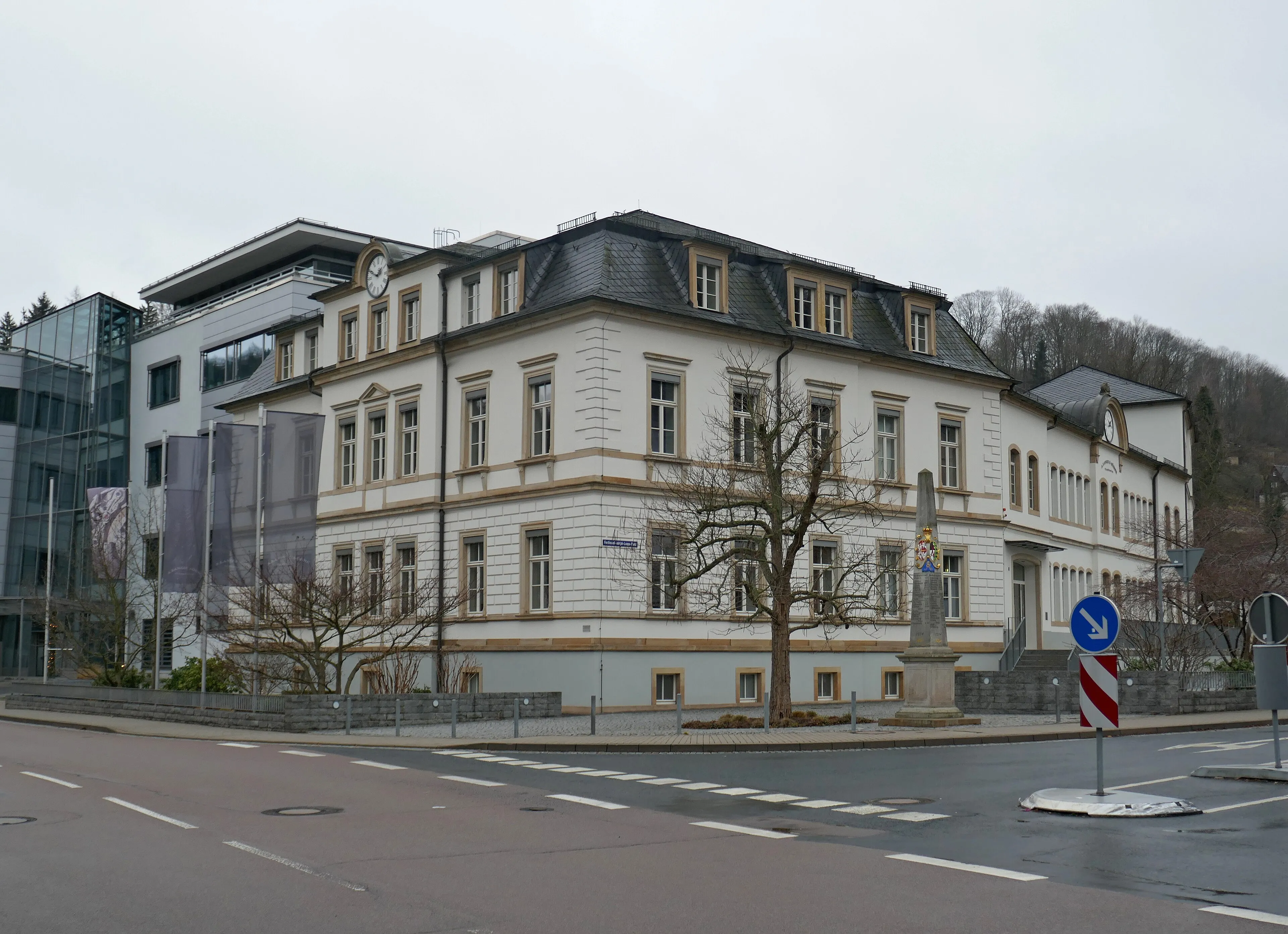
When A. Lange & Söhne introduced the Lange 1 on 24 October 1994, the company had only recently returned from the dead. Founded in Glashütte by Ferdinand Adolph Lange in 1845, it had been absorbed into East Germany’s state-controlled watch industry after the Second World War. Walter Lange, the founder’s great-grandson, revived the business following German reunification in 1990. Four years later, the Lange 1 appeared as one of four watches intended to establish the company’s place among the finest manufacturers in the world.
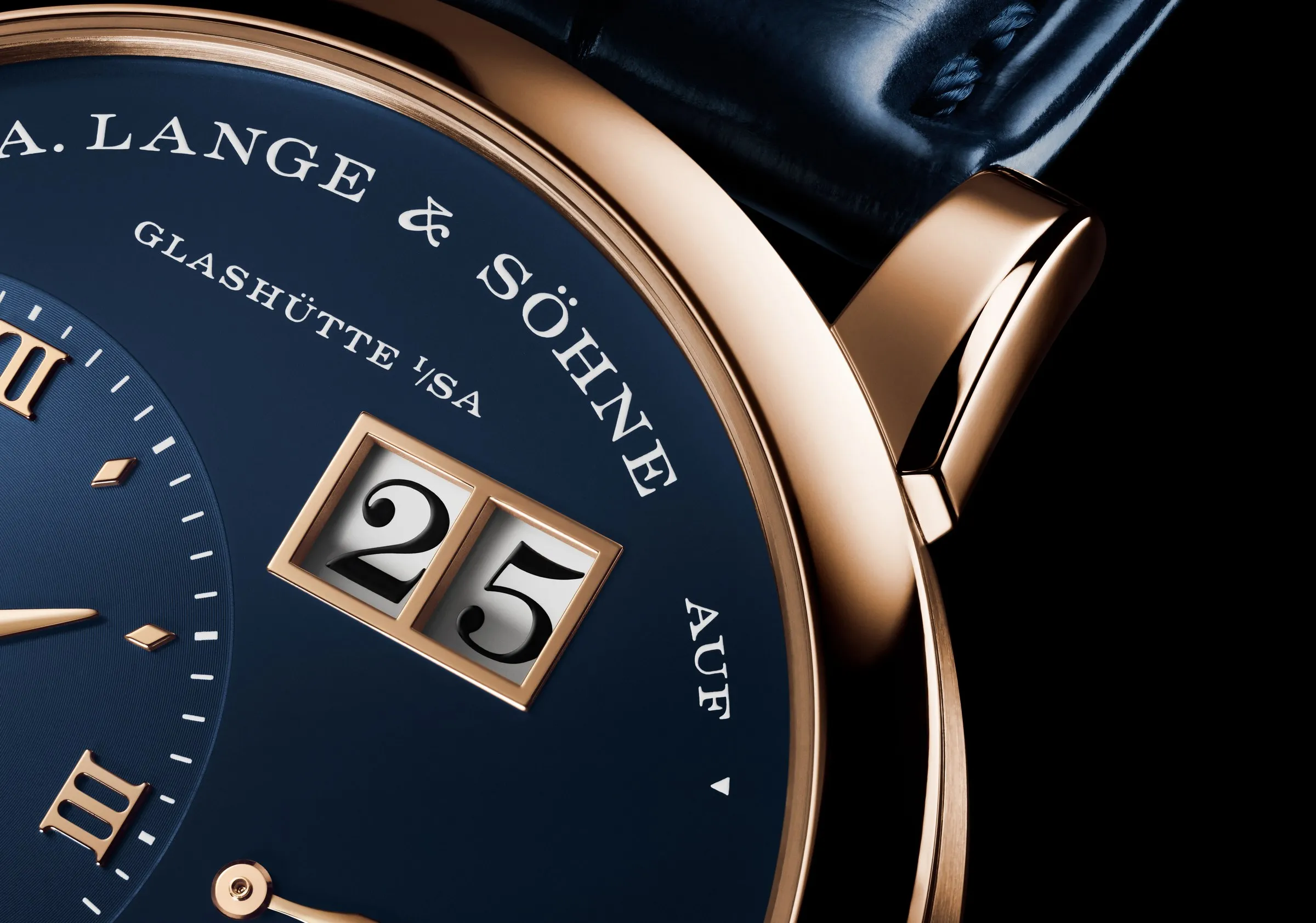
It was an extraordinarily confident debut. The Lange 1 looked unlike any conventional dress watch. Its main time display was pushed to the left, with subsidiary seconds below the outsize date and a power-reserve indicator completing the arrangement. The dial was asymmetrical, yet beautifully balanced, with a visual coherence that made the unconventional layout seem entirely natural.
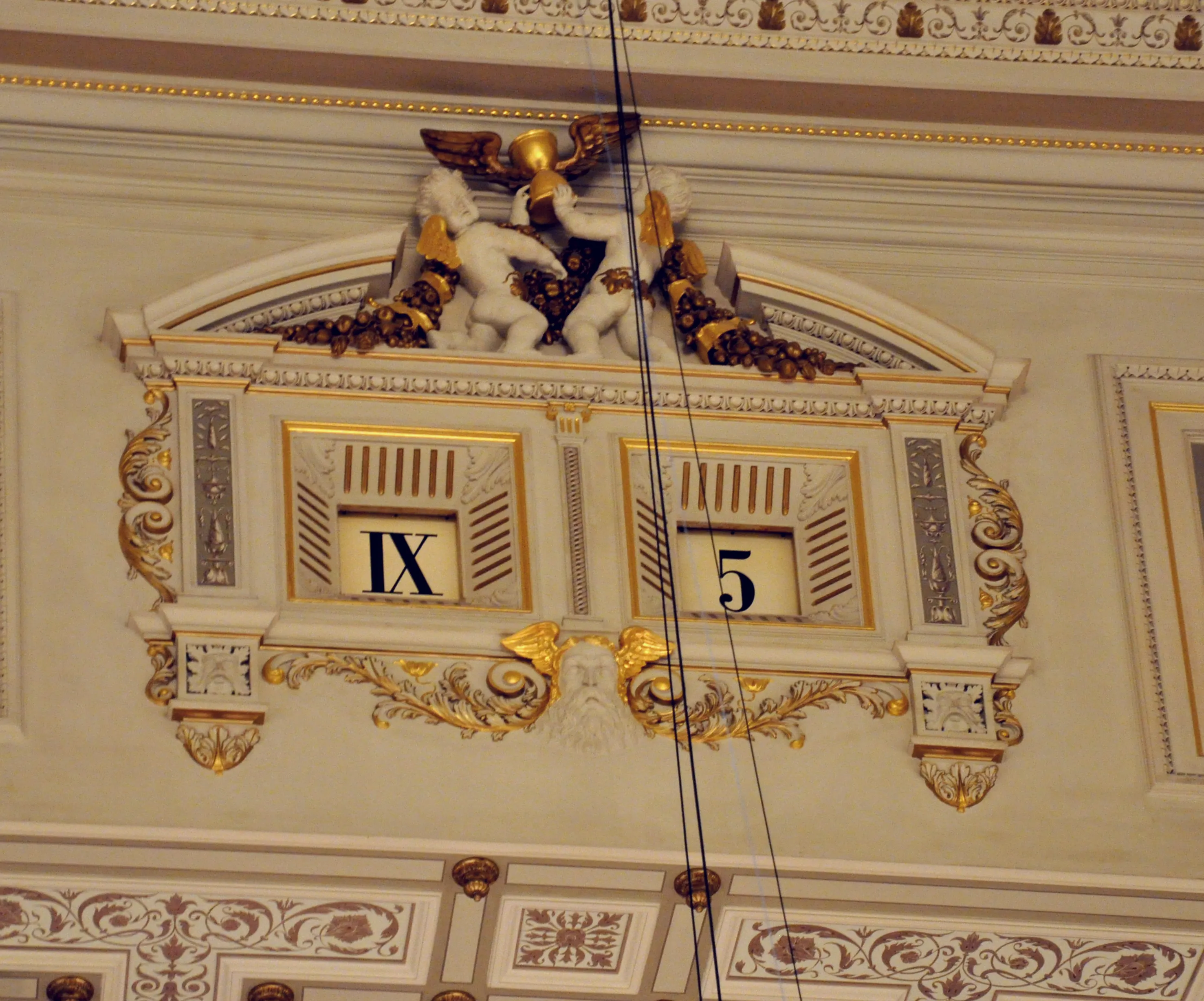
The large date was inspired by the five-minute clock at Dresden’s Semper Opera House, whose distinctive numeral display provided a link to the region’s history. The Lange 1’s interpretation became one of the most recognisable features in modern watchmaking. More than thirty years later, the overall design has changed remarkably little, and there is no compelling reason why it should.
The standard model measures 38.5mm across and approximately 10mm thick. Its proportions are elegant, its dial is unusually distinctive, and the quality of the case and visible components is evident even in photographs. Yet much of what makes the Lange 1 exceptional is concealed beneath that beautifully composed face.
The other side
Turn the watch over and the character of German watchmaking becomes apparent. The movement is dominated by a three-quarter plate made from untreated German silver, an alloy of copper, nickel and zinc whose warm appearance contrasts beautifully with the deep blue of the screws and the red of the ruby bearings.
Several of those jewels sit in polished gold chatons, secured by blued screws. The plate is decorated with fine Glashütte ribbing, while the balance cock carries a floral pattern engraved entirely by hand. Each engraving is subtly different, preserving the individual character of the craftsperson responsible.
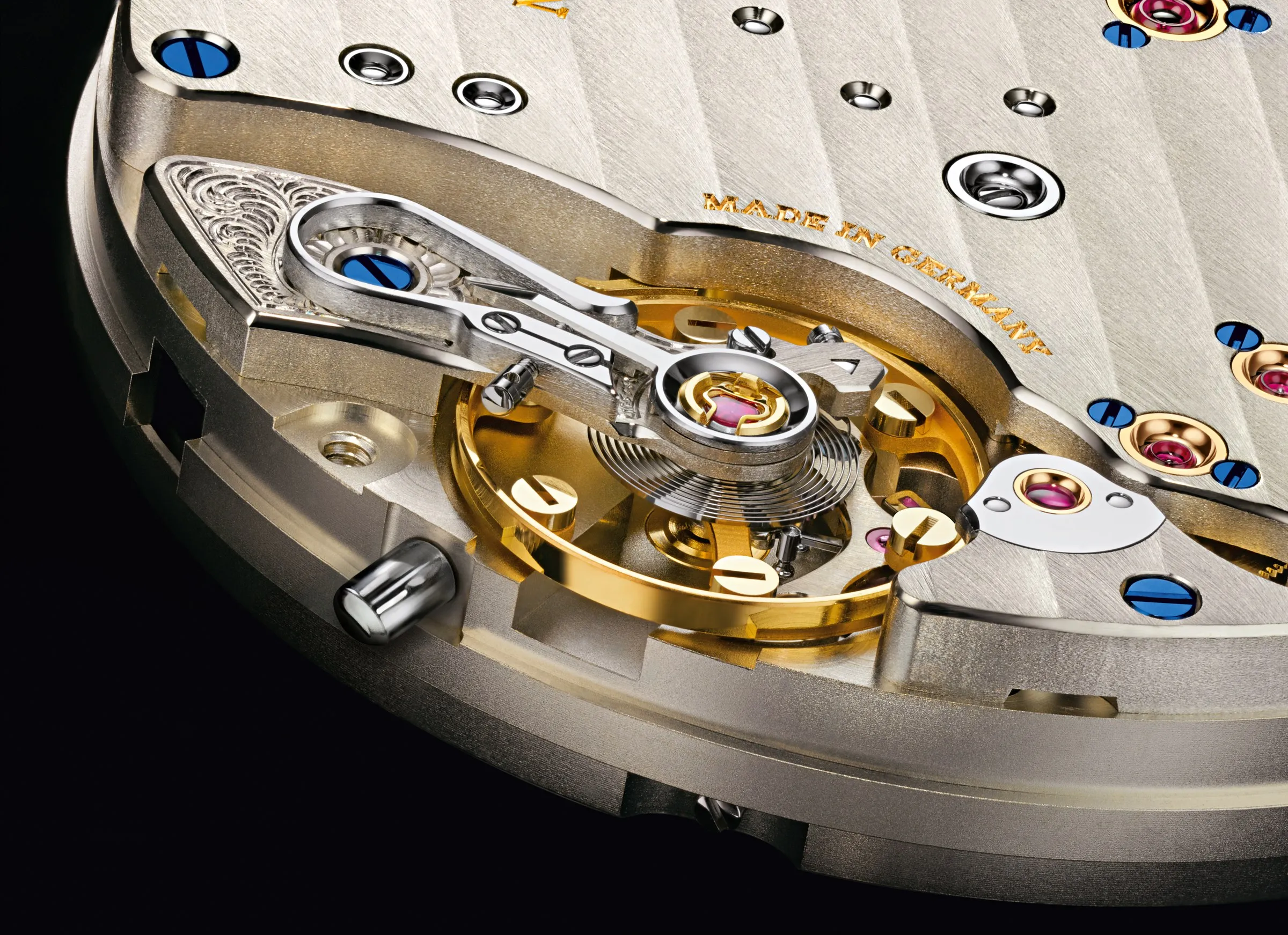
The effect is quite unlike the more open architecture of many Swiss movements. The broad plate conceals much of the mechanism, giving the visible components an almost architectural quality. It is an exceptionally attractive arrangement, and one that rewards examination under magnification.
The finishing is among the finest found in regularly produced mechanical watches. Edges are bevelled and polished, surfaces receive carefully controlled decorative treatments, and the transitions between different finishes reveal extraordinary manual precision. Lange extends this attention to components and surfaces that will be concealed when the movement is completed.
The company also assembles its movements twice. The first assembly allows the mechanism to be fitted, adjusted and checked before it is dismantled, cleaned and prepared for final assembly. This process is particularly important when working with untreated German silver, which marks easily and requires exceptionally careful handling.
The amount of skilled labour involved is formidable. A polished bevel measuring a fraction of a millimetre may require several separate operations, carried out with considerable care. Multiply that effort across the movement, add the engraving and the exacting assembly process, and the scale of the undertaking becomes apparent.
There is something appealing about a manufacturer applying such demanding standards even to work that only another watchmaker is likely to see.
It reflects a particular conception of craftsmanship: the object should be made beautifully throughout, whether or not every detail contributes directly to its performance.
The movement
The current Lange 1 uses the manually wound calibre L121.1, introduced in 2015 to replace the original L901.0. The new movement retained the watch’s established appearance while introducing substantial mechanical changes.
Its 368 components include two mainspring barrels providing approximately 72 hours of power reserve, a balance spring manufactured by Lange and a mechanism that advances the outsize date instantaneously at midnight.
That last improvement is particularly satisfying. In the original movement, the date changed gradually around midnight. The revised mechanism advances the numerals together in a single action, a deceptively simple result requiring considerable mechanical ingenuity.
The power-reserve display, marked AUF and AB, is another characteristic feature. It provides a useful indication of how much energy remains in the manually wound movement, while adding to the dial’s distinctive composition.
Lange’s decision to develop an entirely new calibre without substantially altering the watch’s appearance says something about the company’s priorities. The original design had proved sufficiently successful to deserve preservation; the engineering could continue to evolve beneath it.
An unreasonable amount of care
A Lange 1 is a costly possession. Its precious-metal case and sophisticated movement account for part of the price, but the exceptional standard of hand-finishing is a major reason for it.
This is labour that demands extraordinary skill, patience and consistency. The smallest components must be handled and finished under magnification, often through operations that resist automation. A great deal of the work contributes more to beauty than to measurable performance, and achieving that beauty to a consistently high standard is remarkably demanding.
Considered in this light, the price is surprisingly reasonable for the almost unreasonable amount of attention devoted to the watch.
There is a difference between a high price and poor value. In the Lange 1, a substantial proportion of the cost is reflected in the extraordinary amount of work required to produce it. Its appeal lies partly in the knowledge that such demanding craftsmanship has been applied to an object small enough to wear on the wrist.
And there is a particular pleasure in gradually discovering the results. The dial and proportions can be appreciated immediately, but the movement offers another dimension. Under a loupe, an owner will find details that photographs rarely capture satisfactorily: the character of the engraving, the reflections from a polished bevel, the precision with which adjoining surfaces have been finished.
The Lange 1 is a watch that can reward curiosity for years. An owner who begins with an appreciation of its design may later become interested in its movement, the traditions of Glashütte or the individual techniques involved in its construction. Its appeal can deepen with familiarity.
In that sense, it is a watch that keeps on giving.
The best watch ever?
The Lange 1 combines one of the most successful modern dial designs with a movement whose construction and finishing stand among the highest achievements of traditional watchmaking. Its technical development has been substantial, yet the original aesthetic has proved so successful that it has required remarkably little revision.
It is a particular kind of excellence. The Lange 1 is a refined, manually wound dress watch, with modest water resistance and a movement whose maintenance demands specialist expertise. Its makers have devoted enormous resources to qualities that are most fully appreciated through close examination.
For someone who loves mechanical watchmaking, those qualities can make it almost irresistible. The Lange 1 offers the pleasure of beautiful design at a glance and the fascination of extraordinary craftsmanship on closer acquaintance.
Few objects of comparable size contain so much evidence of human skill and care.
Is it the best watch ever made? That depends on the qualities one values most. But judged by the originality and enduring success of its design, the sophistication of its movement and the exceptional quality of its execution, the Lange 1 belongs unquestionably among the finest.
And unusually for a possession whose first impression is already so strong, it may become more rewarding with every passing year.
Sources
- Lange 1, A. Lange & Söhne
- The five-minute clock in the Semper Opera House and its 180-year history, A. Lange & Söhne
- German silver: aesthetically appealing and sophisticated, A. Lange & Söhne
- The twofold assembly, A. Lange & Söhne
- Explaining the new Lange 1: the same but better, Watches by SJX
- Comparing the old and the new A. Lange & Söhne Lange 1, Monochrome Watches