EDC · Feature
The BIC Cristal: An Almost Perfect Object
It costs next to nothing, writes for miles and has barely changed since 1950. Marcel Bich’s ubiquitous ballpoint pen is one of the great achievements of industrial design, although few of its owners have ever given it much thought.
There is probably a BIC Cristal somewhere in your house. You may even know where it is. The familiar hexagonal ballpoint has been around since 1950, and despite the occasional variation in colour and materials, it looks much as it did when Marcel Bich first introduced it in France. There have been more comfortable pens, more attractive pens and certainly more expensive ones, but it is difficult to think of another writing instrument that has performed its intended function so consistently, for so little money, over such a long period.
Bich did not invent the ballpoint. That distinction belongs to the Hungarian journalist László Bíró, whose development of a pen using quick-drying ink and a tiny rotating ball offered an attractive alternative to the fountain pen. The early examples were expensive and not always reliable, however. The difficulty lay in manufacturing the ball and its socket with sufficient precision to allow ink to flow consistently without leaking. Bich, who had established a business manufacturing components for writing instruments with his partner Édouard Buffard, recognised that improving the manufacturing process was the key to producing a ballpoint that could be sold cheaply without compromising its performance.
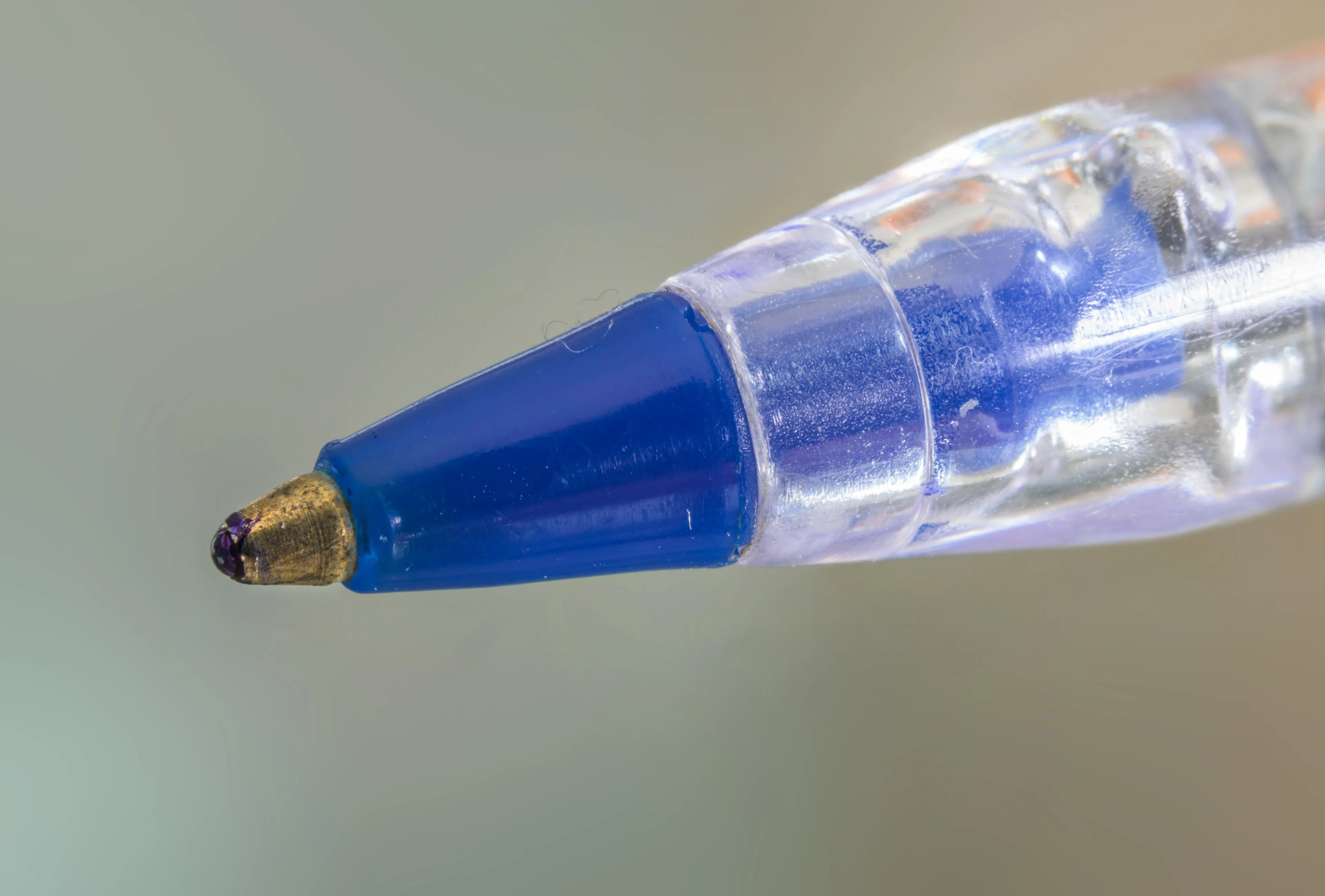
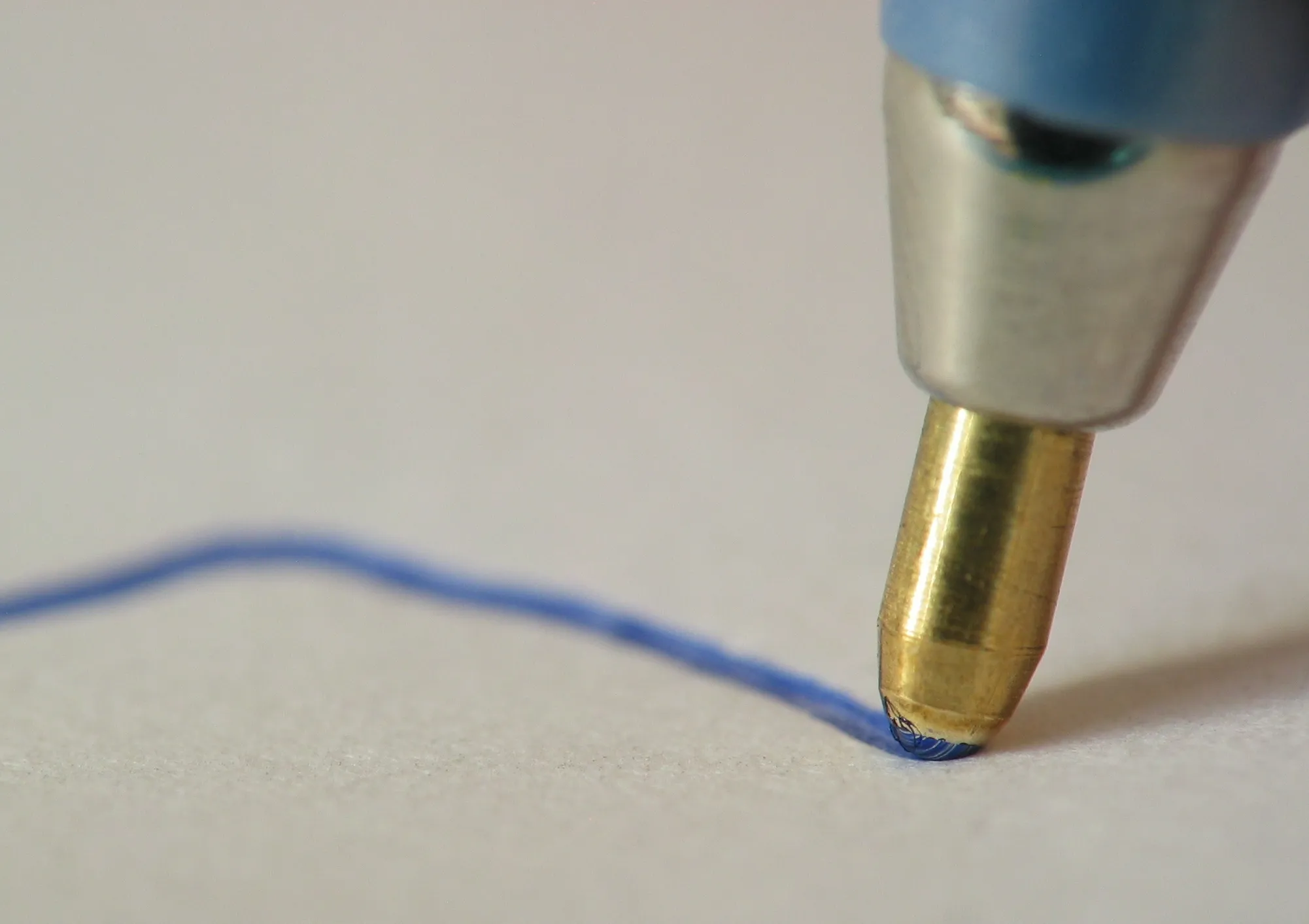
His solution drew on precision manufacturing techniques associated with the Swiss watch industry. The ball in the tip must rotate freely in its socket, picking up a controlled quantity of ink and depositing it onto the paper. The tolerances are tiny, and the ink must have precisely the right viscosity. Bich spent considerable time refining the mechanism and the machinery required to produce it consistently. The result was a pen that could be manufactured in enormous quantities while maintaining a remarkably high standard of reliability. In 1961, BIC introduced a tungsten-carbide ball, whose hardness and resistance to wear made it particularly suitable for the application.
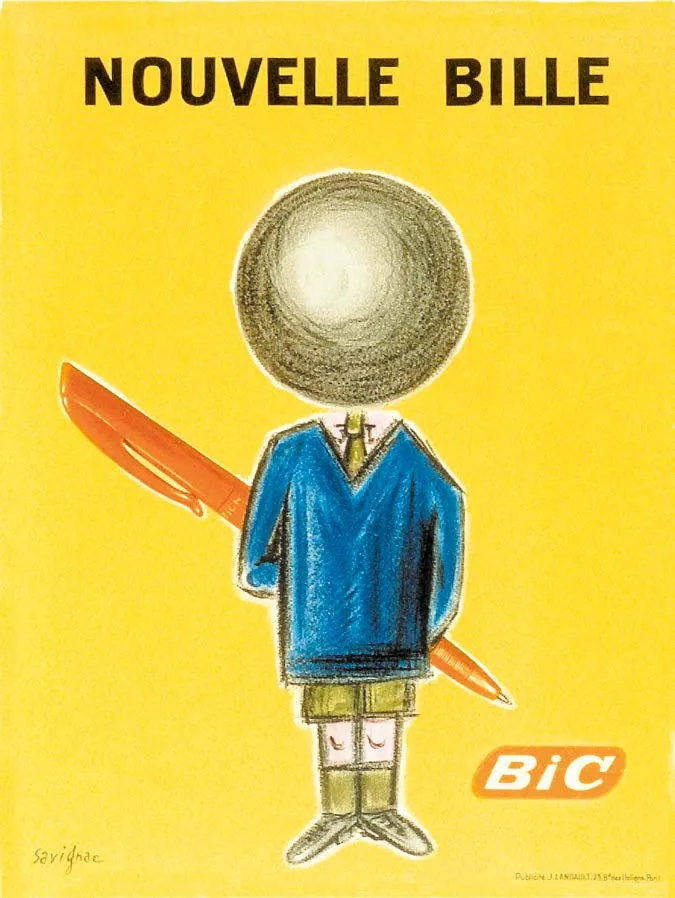
Bich was also quick to see what advertising could do for a cheap pen. In 1952 he engaged the poster artist Raymond Savignac, whose runner chasing a giant ballpoint under the slogan ‘Elle court, elle court, la pointe Bic’ became a national campaign. When the tungsten-carbide ball arrived, Savignac drew a schoolboy with the ball for a head. The Bic Boy joined the company’s logo in 1962 and has stayed there ever since.
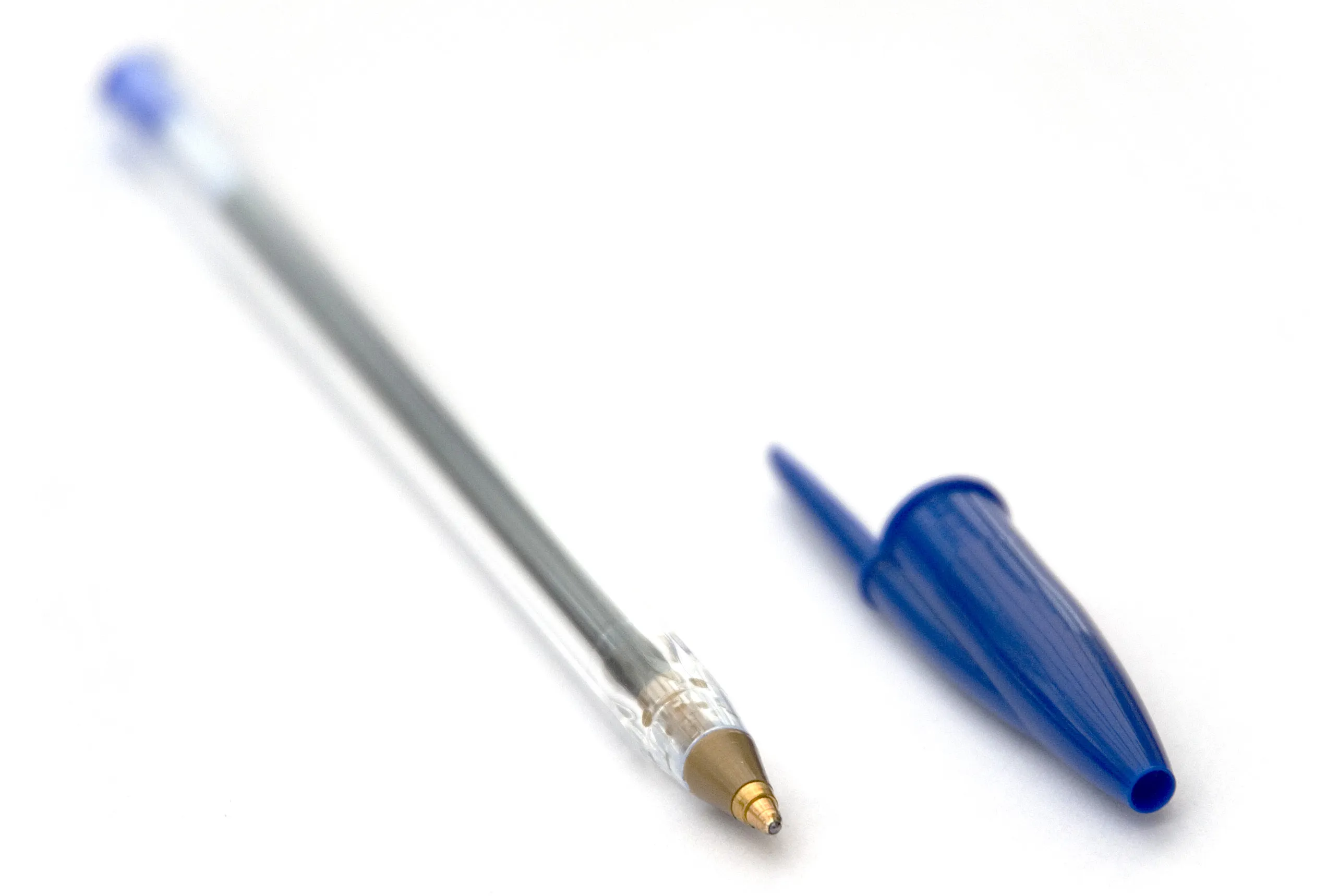
The rest of the pen is a similarly considered piece of engineering. Its transparent polystyrene barrel allows you to see how much ink remains, while the hexagonal shape, borrowed from the traditional wooden pencil, provides a comfortable grip and makes the pen less inclined to roll off a desk. The coloured cap identifies the ink and protects the point. A small hole in the barrel allows air pressure to equalise as the ink is consumed, while the opening in the cap provides an air passage intended to reduce the risk of suffocation if it is accidentally swallowed. The latter feature was introduced after the original design, but has since become familiar.
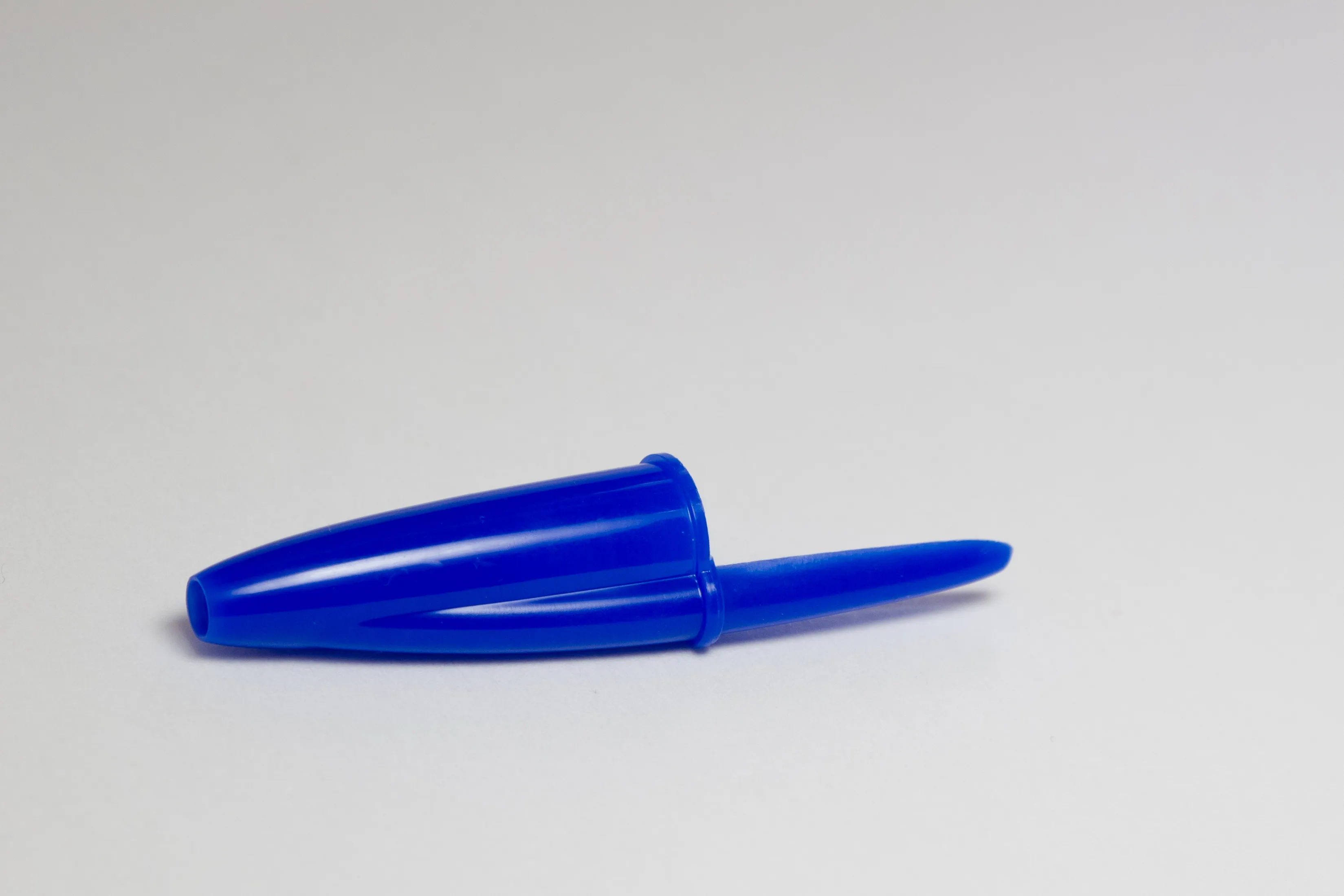
There is little excess material, and almost every feature contributes something to the pen’s usefulness or ease of manufacture. The Museum of Modern Art in New York recognised these qualities when it added the Cristal to its permanent collection in 2001. BIC, meanwhile, says the pen undergoes more than seventy quality controls during production, which seems rather a lot of trouble to take over an object that most people would lend to a stranger without expecting it back.
A standard Cristal can produce a continuous line up to three kilometres long, according to its manufacturer. It also tends to work after weeks of neglect in a drawer, requires no maintenance and is sufficiently cheap that its disappearance is rarely a cause for concern. There are certainly nicer pens to write with. The narrow barrel is not particularly accommodating during long sessions, and the oil-based ink demands rather more pressure than a good fountain pen. Anyone accustomed to a well-adjusted gold nib gliding across fine paper is unlikely to regard the Cristal as the ultimate writing experience.
Its disposable construction is another limitation. Although the pen makes economical use of materials and provides a considerable amount of writing before it runs out, it is still a plastic object intended to be discarded. A refillable pen that remains in service for decades has an obvious appeal, even if the environmental comparison depends on how both products are actually used.
Nevertheless, the Cristal is an unusually successful example of a product whose quality comes from getting the fundamentals right. Its reliability is the result of careful design and precise manufacturing, while its low price reflects the extraordinary efficiency with which BIC has learned to produce it. The company has managed to make a rather sophisticated little mechanism so commonplace that nobody thinks of it as sophisticated any more.
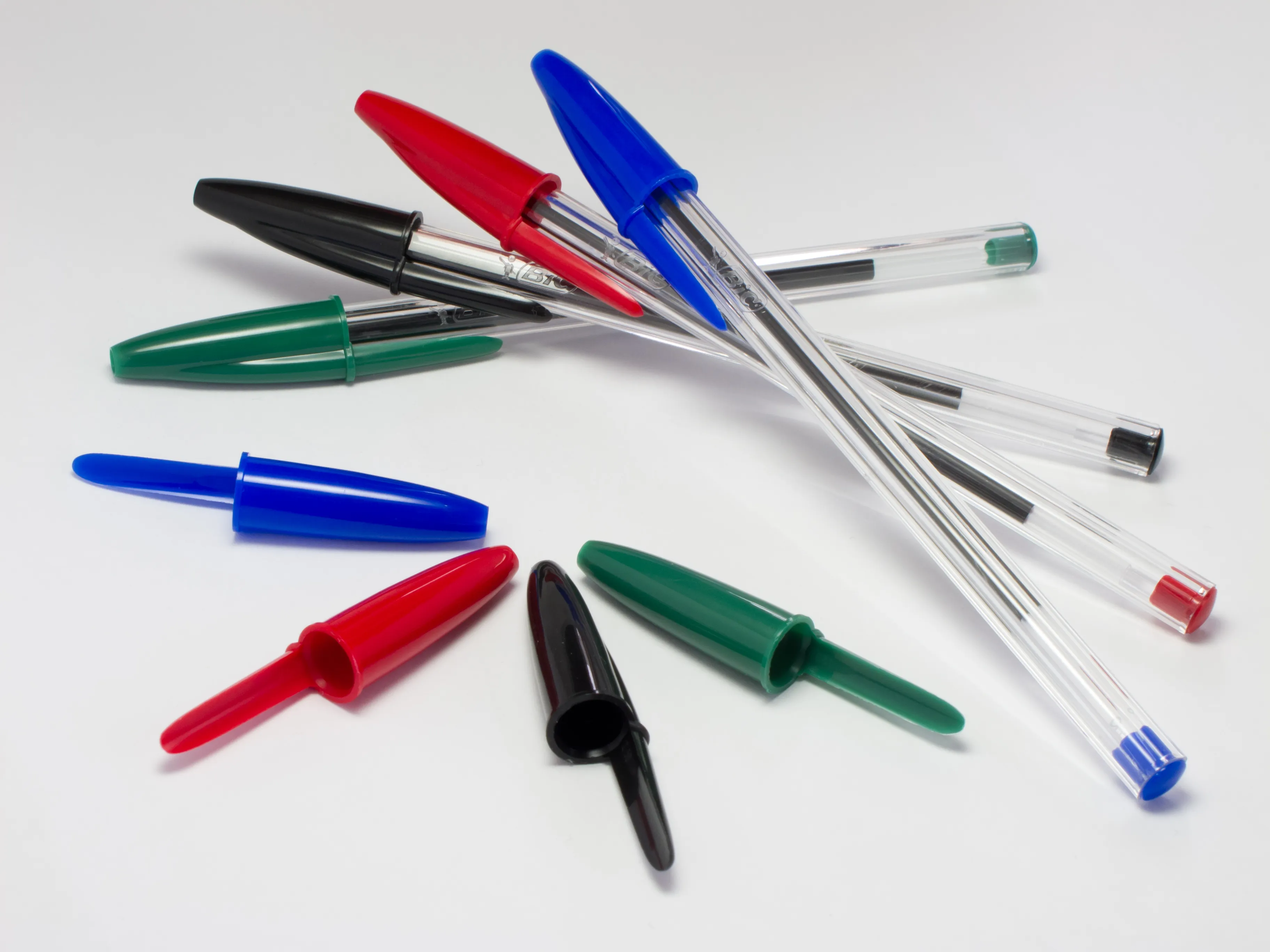
A beautiful Montblanc or Pelikan can be a pleasure to own, and there is nothing quite like writing with a fine fountain pen. The BIC Cristal offers a different sort of satisfaction. It is inexpensive, dependable and almost entirely free of pretension, with a design that has remained relevant for more than seventy-five years. That is a considerable achievement for something you can buy at a supermarket checkout.
Sources
- BIC Cristal: 75th anniversary, BIC
- Bic Cristal ballpoint pen, 1950, The Museum of Modern Art
- BIC, Simply, BIC
- Bic Biro, Design Museum
- László Bíró, Encyclopaedia Britannica